Bring psychological abuse awareness and training to your healthcare organization

Learn More
Skip to content Skip to footer

Dr. Avery Neal’s Books

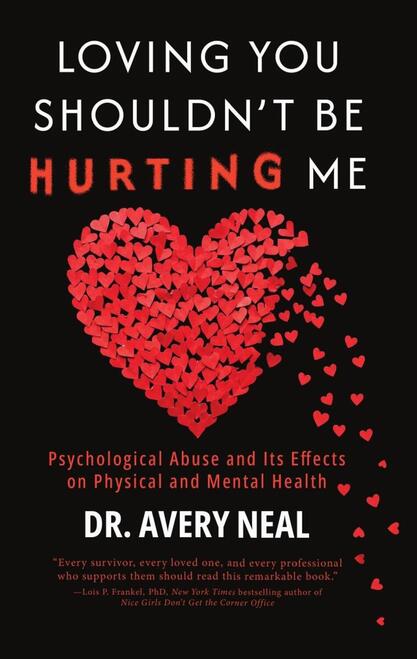
Loving You Shouldn't Be Hurting Me:

by Dr. Avery Neal

Psychological Abuse and Its Effects on Physical and Mental Health

Loving You Shouldn’t Be Hurting Me: Psychological Abuse and Its Effects on Physical and Mental Health, is dedicated to women worldwide, of whom nearly half in the United States (or approximately 57.6 million women) have experienced psychological aggression. This invisible cruelty is the underpinning for all other forms of mistreatment, making it the most difficult obstacle from which to recover.

Moreover, clinical research indicates that subtle psychological abuse inflicts the most devastating damage. This book addresses the global crisis head-on. Anyone trapped in an unhealthy, toxic, or controlling relationship will find a clear path forward in this book, whether the relationship is ongoing, long over, or rooted in childhood trauma. Those who have experienced physical or mental health symptoms as a result of this chronic manipulation will find immediate validation and a comprehensive roadmap on how to truly heal the mind, body, and spirit. While statistics show women are more likely to experience the adverse physical and emotional effects of abuse—and are historically more likely to seek out self-help resources—this work is inclusive of all kinds of trauma. Drawing on a career that has been devoted to helping all survivors heal, Dr. Neal also explicitly addresses how men and children are impacted by the sweeping devastation of psychological abuse.

You are already seeing these patients, people living with psychological abuse and intimate partner violence, and the children growing up in those homes. They come to the emergency department, cardiology, gynecology, endocrinology, neurology, gastroenterology, rheumatology, pediatrics, and family medicine with hypertension, migraine, chronic pain, irritable bowel, insomnia, fatigue, autoimmune flares, anxiety or depression that does not respond to treatment, and children with attention, learning, and behavioral problems that have no clear cause. Psychological abuse is the most common form of intimate partner violence, one in two Americans report experiencing it in their lifetime, and with no injury to point to it rarely appears in a chart. The emergency department is the largest point of entry, yet 77 percent of intimate partner violence victims treated there were never identified as abuse victims, and 71 percent of their visits were for medical complaints rather than injuries. Emergency nurses, physicians, and frontline care teams are the professionals best positioned to recognize it, and most were never taught to see it. This training series gives you the clinical foundation to recognize psychological abuse in your patients and their children, understand its physical, mental, and developmental effects, and identify and refer in a way that improves outcomes and strengthens the value of care. Distributed by Rittenhouse Digital.

If He's So Great,
Why Do I Feel So Bad?

by Dr. Avery Neal

Recognizing and Overcoming Subtle Abuse

In this groundbreaking book, Dr. Avery Neal, psychotherapist and founder of the Women’s Therapy Clinic, helps you recognize the warning signs of what she terms “subtle abuse.” As you are able to accurately identify patterns that have never made sense before, you are better equipped to make changes to free yourself from ongoing aggression and control.

Nearly half of all women—and men—in the United States experience psychological abuse without realizing it. Manipulation, deception, and disrespect are hard to detect because they leave no physical scars, but they can be just as traumatic.

Dr. Avery Neal has many years of experience speaking, writing, and practicing psychotherapy to create resources to explore issues around psychological abuse.

As an expert in the field, Dr. Avery Neal, has guided countless individuals to regain their self-esteem, their joy, and their lives, in the wake of this type of unhealthy relationship.